
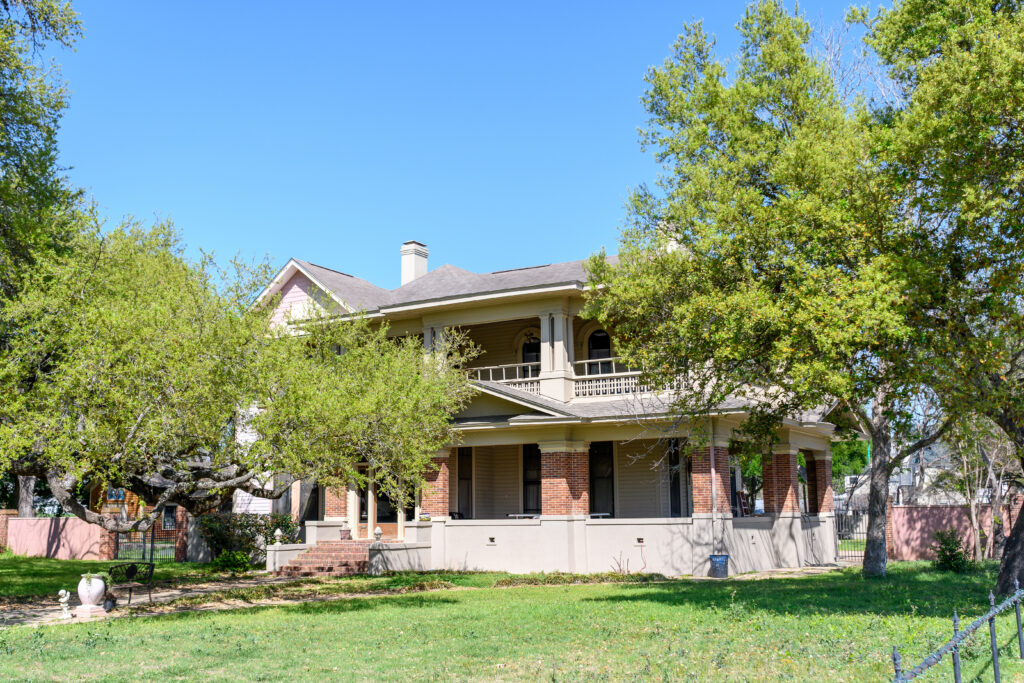
Built in 1883 for banker and cattleman Hugh Lewis and Susan Jane Parramore Lewis, this residence is attributed to Austin architect Frederick E. Ruffini and appears on Gonzales’s official heritage tours as one of the city’s signature late nineteenth century homes. The tour materials also record a significant remodeling in 1920 and later restoration work in the 1990s.
People and context.
Hugh Lewis was born April 10, 1832, in Rankin County, Mississippi, and settled in Gonzales in 1852. He married Susan Jane Parramore on December 24, 1856. After Civil War service with the Eighth Texas Infantry, Company E, Lewis returned to commerce and finance. By 1866 he was in partnership with G. N. Dilworth in a range of mercantile and banking ventures frequently noted in local directories and newspaper abstracts.
From the 1870s into the 1890s Lewis expanded dramatically into cattle and land with his brother in law Col. James Harrison Parramore. The Handbook of Texas notes the Parramore–Lewis partnership and documents the formation of the San Simon Cattle and Canal Company in 1883, incorporated in 1885, with water rights in the San Simon Valley of Arizona and western New Mexico. One contemporary report credited the range with branding 15,000 calves in a single year and recorded an 1892 sale near 60,000 dollars to Nebraska’s Standard Cattle Company. Company records preserved in the Portal to Texas History list Hugh Lewis as president and J. H. Parramore as secretary among the stockholders. Additional ledgers and photographs survive in the University of Arizona Special Collections. Together these sources place Lewis among the region’s most substantial ranch-capital figures of the era.
House history
City walking and driving tour publications attribute the design to F. E. Ruffini and give the construction date as 1883, with a 1920 remodel that altered the exterior expression while the plan and major finishes remained. Those same guides place the house on the tour roster of architecturally notable properties. A Texas Historical Commission photo file on the Hugh Lewis House confirms the location within Block 31 on multiple lots, consistent with the grounds visible today.
Architecture and finishes
Period descriptions and local tour copy emphasize intact interior craftsmanship: longleaf pine millwork and wainscoting, oak and walnut parquet flooring, a walnut main stair, and five original fireplace surrounds with mantels. Broad porches on the south and west elevations admit light and breeze and knit the formal rooms to the garden. While the original presentation was Victorian in character, the 1920 remodeling refreshed the outward style without erasing the high finish of the late nineteenth century interiors.